Time crystals, bounty hunters, and stealing faces.
TNW View in browser →

Hello, carbon-based lifeforms!

Precognition of disasters

It's Tom here, covering Tristan as he takes a two-week sojourn through time and space.

I've been struck by the recent influx of AI systems that promise to predict attacks by enemy combatants. In the last week alone, two eye-catching examples have emerged.

The first was courtesy of the US military. General Glen VanHerck said the Pentagon is developing AI that could predict events "days in advance." Cue the inevitable Minority Report comparisons.

The system was recently tested on a simulated threat to a crucial site (think: the Panama Canal).

"We would take artificial intelligence and use machine learning to take a look and assess, for example, the average number of cars in a parking lot that may be there in a specific location to a competitor or a threat," General VanHerck said during a press conference. "And we monitor that over a period of time."

Days later, a research team unveiled their own attempt to predict attacks by adversaries. The group said they've developed models that predict and explain acts of terrorism.

The researchers were more measured in their claims than General VanHerck. In tests, their algorithms proved effective at predicting attacks in places with a fairly high prevalence of terrorism. But they acknowledged that "black swan events," which occur very sporadically, are almost impossible to predict.

Nonetheless, their study provided an interesting analysis of worldwide terrorism trends. 

They found, for instance, that in regions strongly affected by terrorism, such as Southeast Asia, the risk of a terrorist event peaked roughly 200 weeks after a previous attack. However, in areas with a lower terrorism prevalence, such as Russia and Eastern Europe, the risk reached its apex at around 400 weeks:

This finding highlights that terrorists do indeed tend to target the same locations multiple times. The reasons for this can be manifold, but in general, it seems that these locations reflect the strategic equilibrium between reachability (i.e., cost for attacking for the terrorists) and the strategic value (i.e., benefits of an attack) of a location.

Their moderate claims made me suspicious of the US military's aplomb, particularly as the Pentagon won't disclose any details about the system or the trials. There's always a risk in trusting decisions made by opaque algorithms, especially when they're used in military applications.

However, the AI used in the experiments seems less scary (and interesting) than the headlines make out. The system sounds more like an incremental advance on the type of data analysis that the Pentagon has been doing for years.

It might produce more accurate predictions, but that doesn't mean they will be heeded. From 9/11 to the US Capitol riots, American leaders have shown a tendency to mishandle warnings of deadly events.

If you want to read more about the use of AI in warfare, check out these Neural stories on quantum computers in the military and the Pentagon getting sucked into the AI hype machine.


Tales from the arXiv archives

Your face is mine

Facial recognition is already a common way of unlocking phones and it's starting to gain traction as a means of accessing buildings

Activists have called it an affront to privacy rights that could foster machine-driven segregation. But new research shows that the tech is also easy to deceive.

Scientists at Tel Aviv University used a neural network to generate images called "master faces" that, as the name suggests, serve as master keys for facial authentication.

These facial templates could potentially be used to impersonate users of facial ID systems — without having access to any of their information.

The team tested their technique on three leading face recognition systems. They found that just nine master faces could cover more than 40% of the population.

Their method also has the potential to evade more sophisticated systems. They say it could be combined with deepfakes to animate master faces and thereby overcome live detection systems.

"Our results imply that face-based authentication is extremely vulnerable, even if there is no information on the target identity," the researchers wrote in their study paper.

Their findings are yet another reason to be wary of facial recognition.

You can read the pre-print study paper here on arXiv.

What we’re writing

💠

Google’s ‘time crystals’ could be the greatest scientific achievement of our lifetimes Screw your physics, Isaac Newton

🔮

MIT researchers use AI to predict the next big things in tech It's bad news for blockchain

🐦

Why Twitter wants ethical hackers to fix its algorithmic biases Gainful employment for bounty hunters 

🌐

The age of the metaverse is upon us Zuckerberg is excited. What could possibly go wrong? 

🔐

Academics slam Facebook for shutting out research into political ads Let's keep the scrutiny in-house, mmkay?

🚒

This new open-source firefighter safety project will save lives — and you can help Open-source is blazing a trail

What we’re reading

👎

Hundreds of AI tools have been built to catch covid. None of them helped (MIT Technology Review)

💰

Will Nvidia’s huge bet on artificial-intelligence chips pay off? (The Economist)

🎨

Artificial intelligence may have cracked the code to creating low-priced works on canvas (Artnet News)

Sponsored by TNW

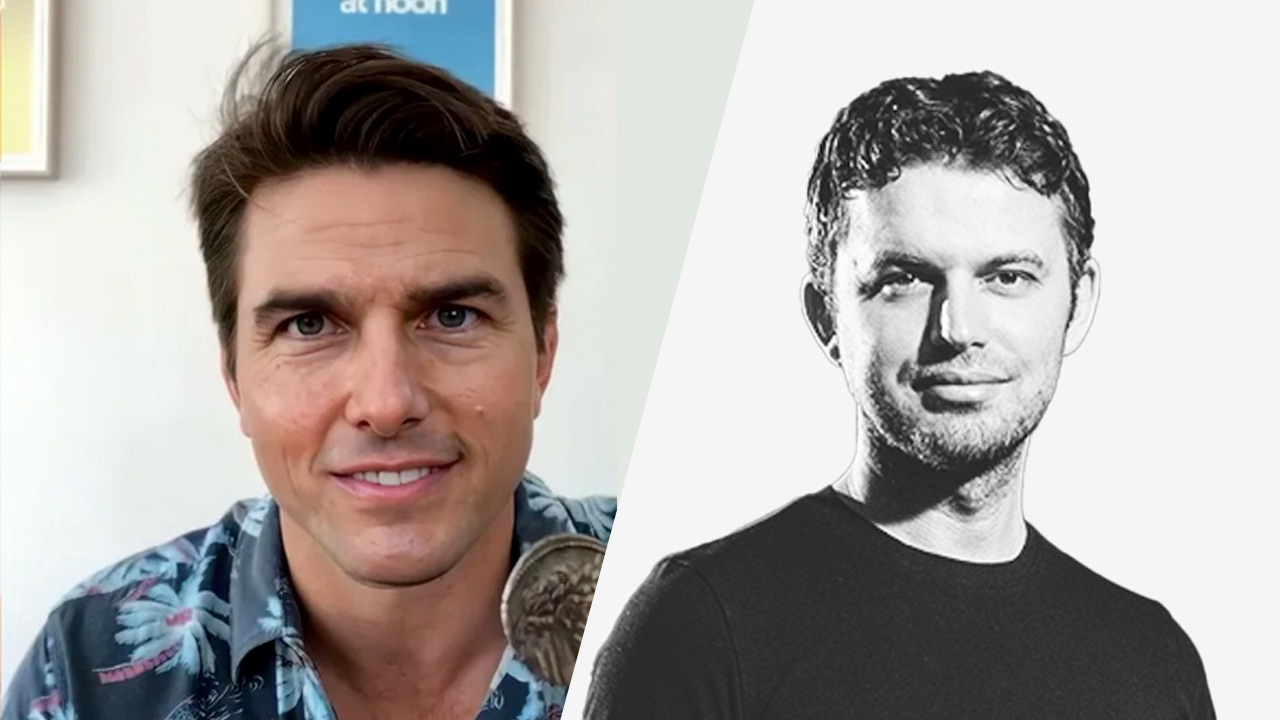
Wait...Is that Tom Cruise?

I'm getting super excited for TNW 2021 — and you should too!

Why? Because of speakers like Chris Ume. I can't wait to see him on stage as he's the co-founder of Metaphysic, and is widely recognized as the world expert in the emerging field of hyper-real videos... and he created deepfake Tom Cruise on TikTok.

Tickets are currently up to 60% off and going fast! Snag yourself a deal and reserve your ticket today.

See you there!

Something profound from the internet

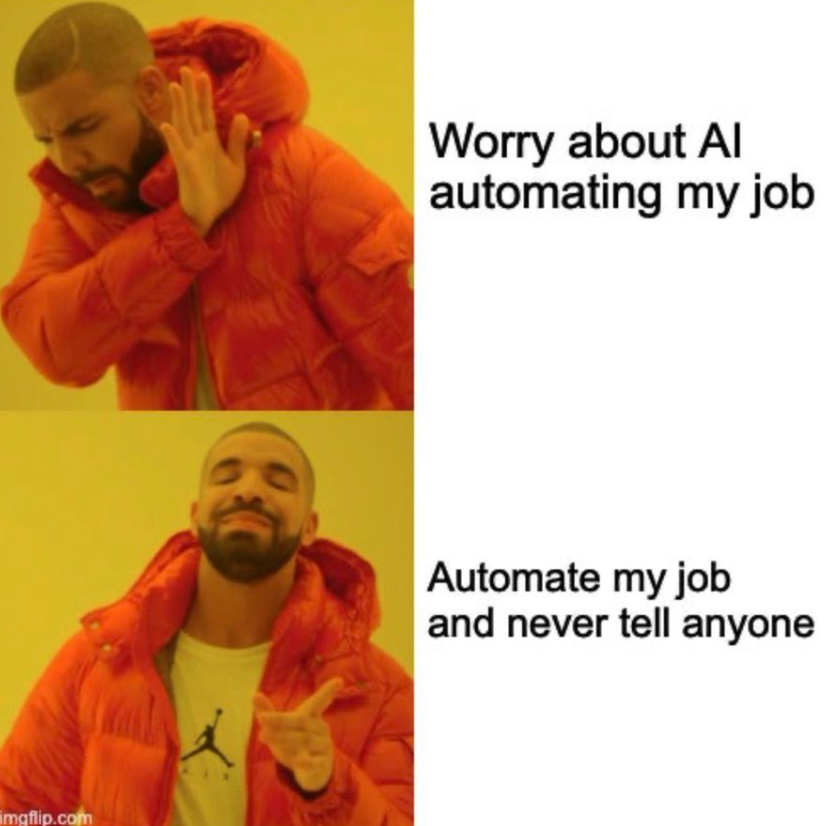
I've previously experimented with using AI to do my job, but I couldn't get away with it. The machines are too damn accurate to pass as me.

Some programmers, however, have successfully turned the threat into an opportunity. It might not be the geeks who inherit the earth, but the systems they create.


Our favorite AI video of the week

YouTuber Ryder Damen is a master of DIY AI. As someone who just had a precious delivery of beer stolen from my doorstep, I found his new porch security system particularly appealing. I'd suggest swapping the sprinkler water for cat urine though.

(click the image below to watch on YouTube):


Well, bye

Thanks for joining me for this week's newsletter. You can give us feedback by clicking on one of the emoji icons below. But if you're eyeing up the unimpressed face, I'd suggest waiting to click until Tristan's back in charge.

Until next time,

Tom

robot falls


Any good?

How was today’s newsletter? Amazing? Awful?! Help us make it better by sharing your brutally honest emoji feedback 👇

Positive Meh Negative

From Amsterdam with <3